Why a Chunky Chopping Board is the Most Useful Thing in Your Kitchen
There’s a reason professional chefs and serious home cooks keep coming back to chunky chopping boards. A thick, solid piece of hardwood doesn’t just look impressive on a kitchen counter – it genuinely performs better, lasts longer, and makes everyday food preparation feel more considered. If you’ve been using a thin, lightweight board that slides around and flexes under a knife, you’ll understand immediately what you’ve been missing the first time you work on something properly built and made.
At Crystal Woods, we make chunky chopping boards by hand from a range of beautiful British and exotic hardwoods. This guide explains what makes a thick board worth the investment, which wood species to look for, and how to choose the right one for how you actually cook.
What Makes a Board “Chunky”?
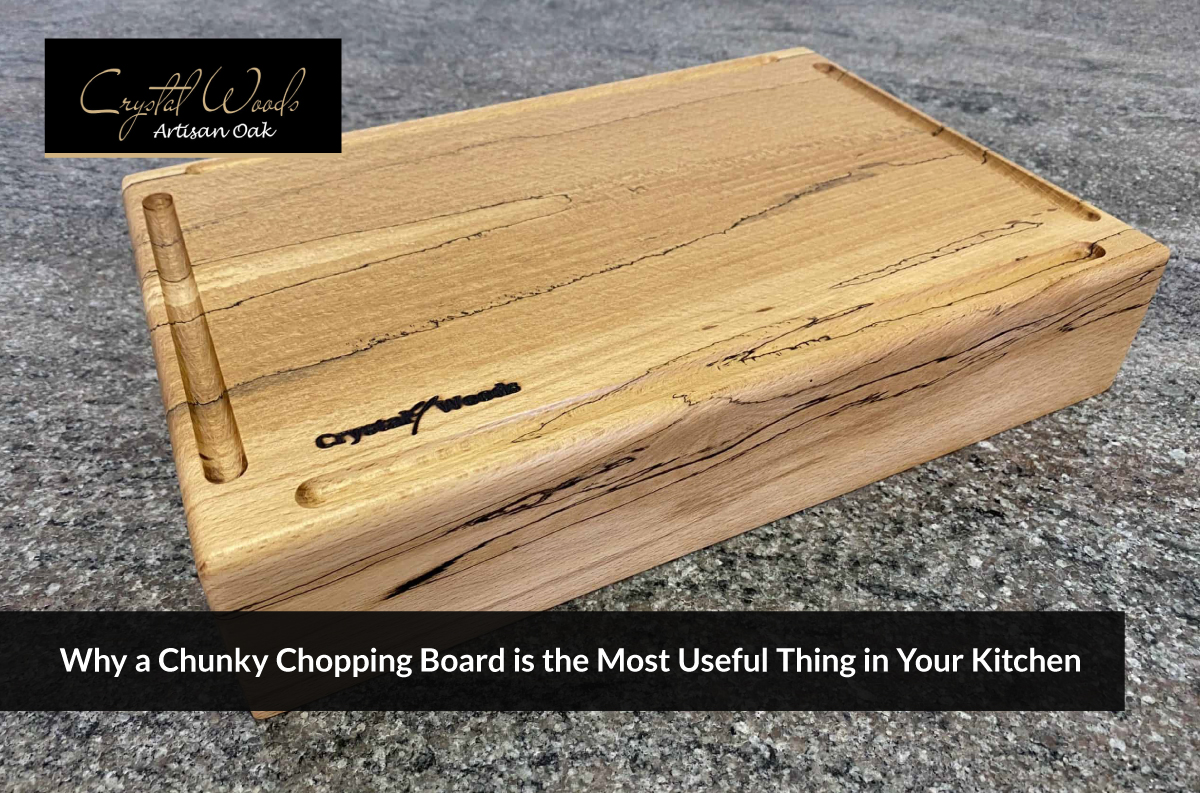
The term gets used loosely, but when we talk about a chunky chopping board we mean something with real presence – typically 40mm to 60mm thick, and substantial enough that it doesn’t move when you’re working on it. A board this deep has a completely different feel underfoot, under a blade, and in the hand. The weight anchors it. The depth absorbs impact without transmitting it through to your worktop.
Thin boards – the kind that come in a set of three for a tenner – flex under pressure, develop deep knife scores quickly, and tend to split at the edges once moisture gets into the grain. A well-made chunky board, properly oiled and cared for, will outlast any knife you own.
The Best Woods for a Chunky Chopping Board
Not all hardwoods behave the same way when they’re used for food preparation. Here’s how the species we work with at Crystal Woods compare:
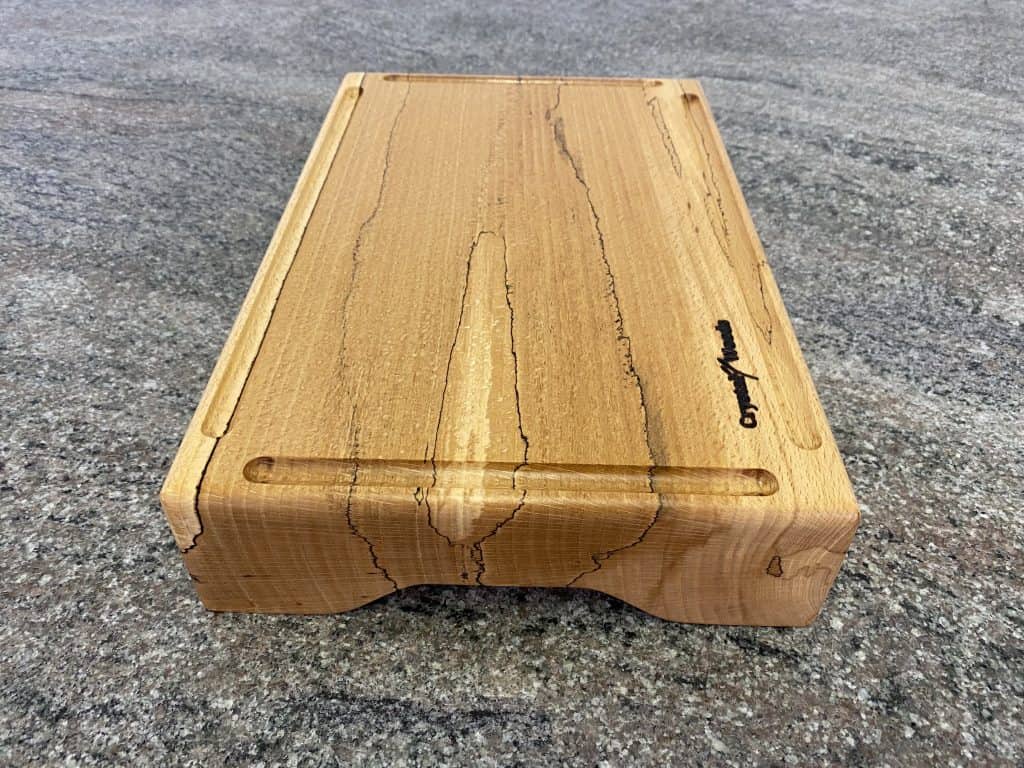
Spalted Beech
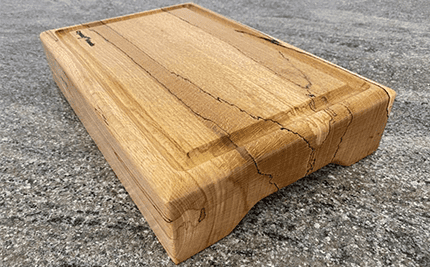
Spalted beech is our most popular wood for chunky boards and for good reason. Spalting is a natural process – a form of fungal activity that creates extraordinary dark tracery lines through the pale grain of the beech. The result is a board that’s genuinely one of a kind: no two pieces of spalted beech look alike. Crucially, once dried and finished, spalted beech is completely food-safe and as durable as standard beech.
If you want a board that doubles as a statement piece on your kitchen counter, spalted beech is the answer.
Sycamore
Sycamore has been the traditional British butchers’ block wood for centuries, and with good reason. It’s exceptionally hard, has a tight, close grain that resists bacterial harbouring, and develops a wonderful silver-white patina over time. Our sycamore butchers block boards are made as live edge slabs – keeping the natural outer edge of the tree – which means the shape of each one is entirely its own.
English Walnut
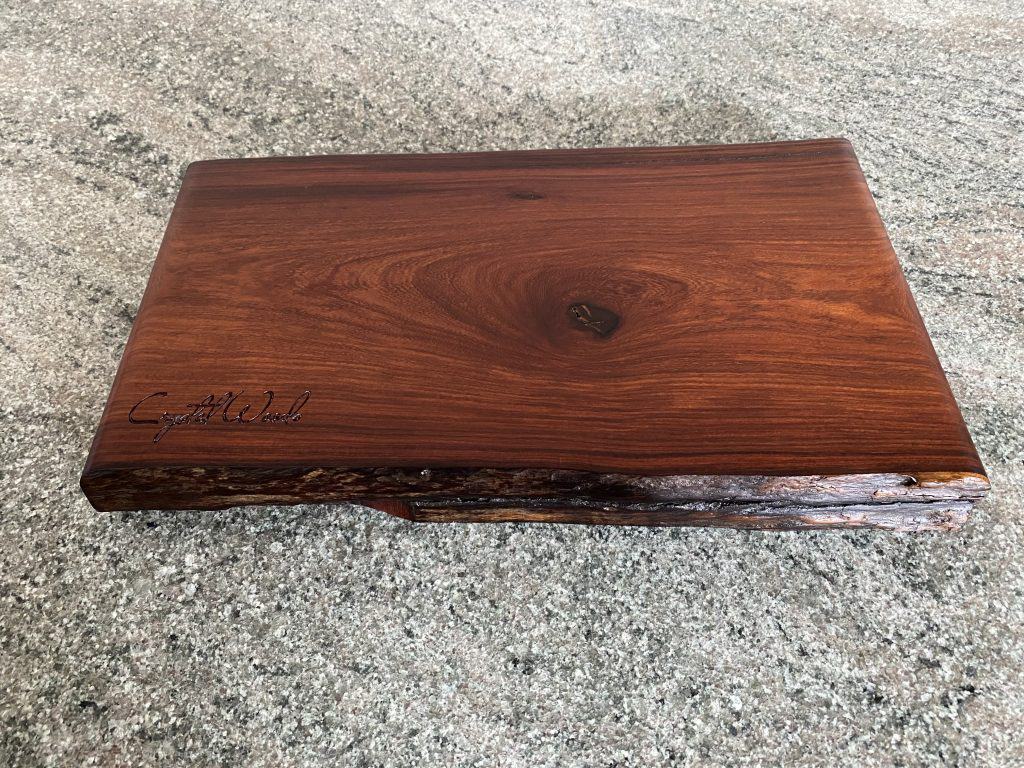
Walnut brings a rich, dark warmth to a kitchen that beech and sycamore can’t match. English walnut is harder than most people expect, with a slightly open grain that takes oil beautifully and ages well with use. Our live edge walnut boards are particularly popular as both a chopping board and a charcuterie serving board – they look as good on a dining table as they do on a kitchen counter.
Panga Panga
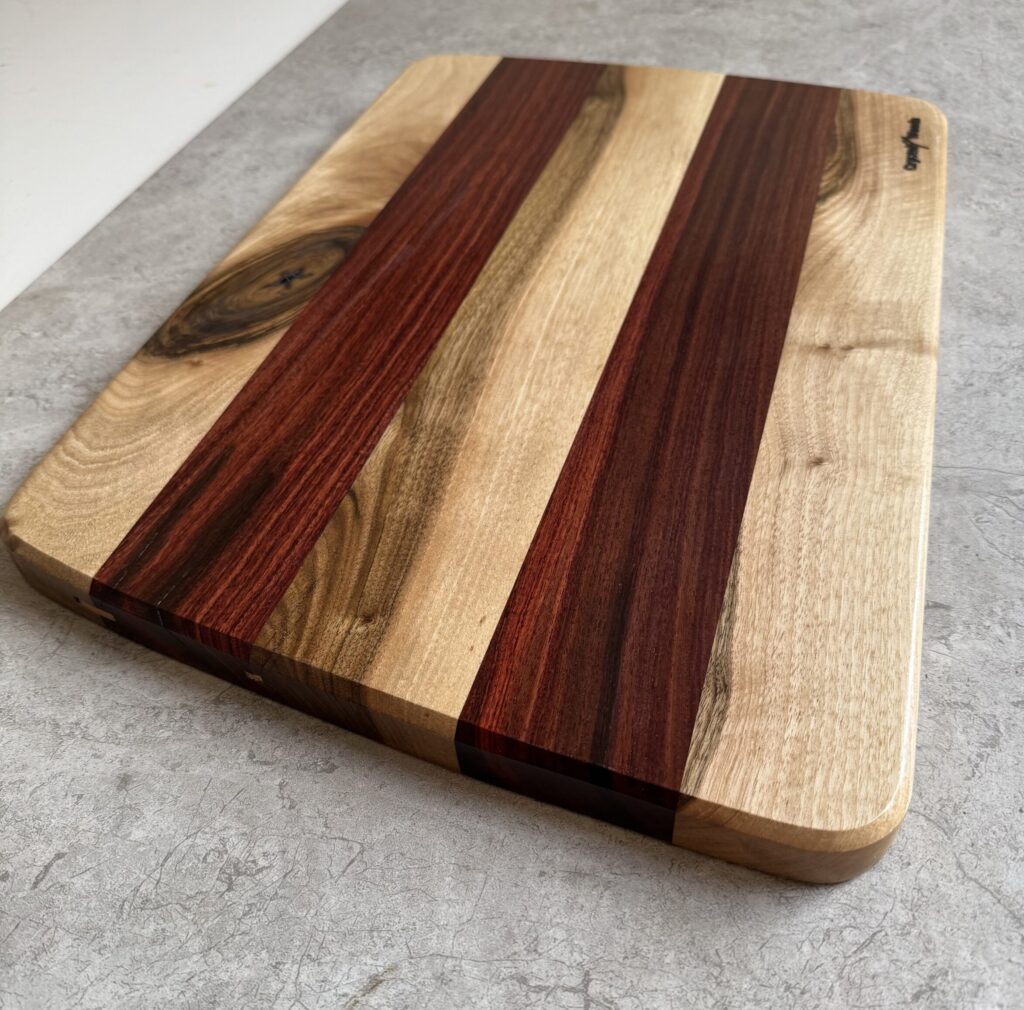
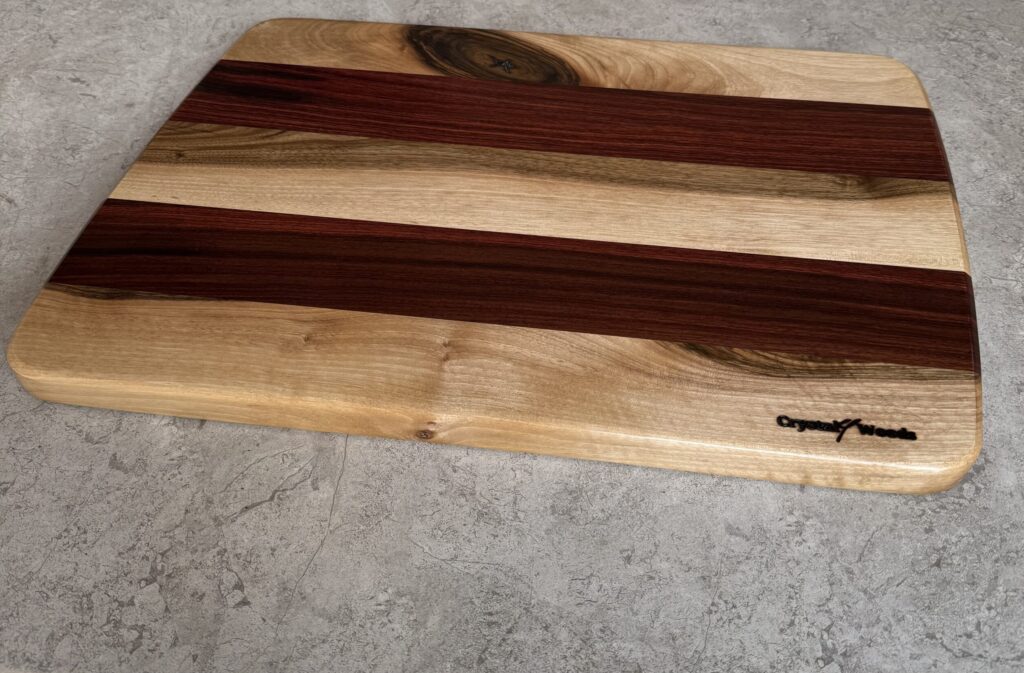
Panga panga is a lesser-known African hardwood that deserves far more attention. Visually it has some similarities to wenge – very dark, with a striking straight grain – but it’s exceptionally dense and hard-wearing. It’s one of the more exotic options in our range and tends to appeal to people who want something genuinely unusual.
Why Chunky Boards Are Better for Your Knives
This surprises a lot of people: a thicker, denser board is actually kinder to knife edges than a thin one. The reason is in the surface. A thin plastic or composite board is unforgiving – the blade meets hard resistance on every stroke. A properly finished hardwood surface has a very slight natural give that allows the blade edge to glide cleanly rather than impact.
This is why wood has never really been replaced in professional kitchens despite the years of food safety advice steering people towards plastic. Good hardwood, kept clean and oiled, is a genuinely hygienic surface – and it doesn’t destroy your knives in the process.
Choosing the Right Size
For most home kitchens, a board in the region of 40cm x 30cm and 40mm+ thick is the sweet spot – big enough to work with confidence, not so large it dominates the worktop. If you do a lot of butchery, bread-making or pastry work, going larger makes sense. Our chunky sycamore butchers block slabs run to some impressive dimensions and can form a semi-permanent prep station on a kitchen island.
For serving as well as chopping – bringing a board to the table with a charcuterie spread, bread, cheese – a live edge design adds something that a straight-sided board simply doesn’t.
How to Care for a Chunky Wooden Chopping Board
A chunky hardwood board is not a set-and-forget purchase, but the maintenance required is genuinely minimal:
Oil regularly. When you first receive a new board, apply food-grade mineral oil or a dedicated board oil generously across all surfaces, including the underside and edges. Leave it to soak in for a few hours, then wipe off the excess. Repeat this process every couple of months, or whenever the wood starts to look dry.
Wash by hand. Never put a wooden board in the dishwasher. The heat and prolonged moisture will cause warping and splitting regardless of how well it was made. Wash with hot water and a small amount of washing up liquid, then dry immediately and stand on its edge to allow airflow.
Don’t soak it. Leaving a wooden board sitting in water is the fastest way to damage it. Quick wash, quick dry.
Remove deep knife marks occasionally. If the surface becomes significantly scored over time, a light sand with fine-grit paper followed by re-oiling will bring it back to excellent condition.
Made by Hand in Devon
Every chunky chopping board from Crystal Woods is made individually by Llewie in his workshop on Dartmoor. That means no two are exactly alike – the grain patterns, natural edge profiles and character marks are unique to each piece of timber. When you buy a Crystal Woods board you’re buying something that couldn’t have come from a factory.
If you’re looking for a gift, a substantial chunky board in spalted beech or walnut is one of those rare presents that people use every single day and genuinely appreciate for years.
Browse our full range of chunky chopping boards in the Crystal Woods shop, or get in touch if you’d like something made to a specific size or wood species.